





















Cambodia ends prosecution of former-Khmer Rouge generals
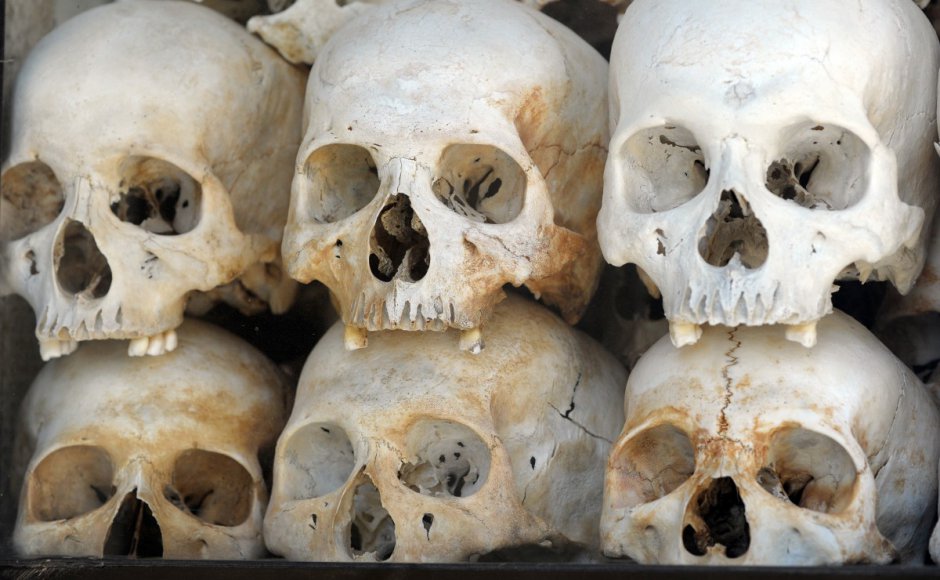
Skulls are displayed at the Choeung Ek killing fields memorial in Phnom Penh on July 2, 2015. Two former Khmer Rouge leaders July 2 began appeal hearings against their landmark convictions for crimes against humanity last year which saw them handed life sentences by Cambodia’s UN-backed court.
CITING a job completed, Cambodia has confirmed it will put a stop to the United Nations-backed tribunal into war crimes that last week convicted two leaders of the Khmer Rouge for genocide.
According to the Associated Press, Deputy prime minister Sar Kheng said there would be no further prosecutions and ruled the tribunal’s work done after just three convictions over its nine-year history. The only other person convicted was the regime’s prisons chief.
The tribunal, formally the Extraordinary Chambers in the Courts of Cambodia (ECCC), was set up to target leaders of the military regime who were in power from 1975 to 1979. But it has been plagued by controversy, budget woes and a sense among the public that what has been done has been too little and far too late.
The total cost of the ECCC has run to US$300 million. It was hoped the tribunal would not only punish those people guilty of crimes on a national scale, but also serve to promote human rights and establish a historical record.
On Friday, the court found two former high-ranking Khmer Rouge cadres guilty of genocide against Cambodia’s Cham Muslim minority and ethnic Vietnamese.
Nuon Chea, 92, and Khieu Samphan, 87, received life sentences, however, both men are already serving life sentences related to previous tribunal verdicts.
Speaking at a government ceremony on Saturday, Sar Kheng appeared to be reassuring any former-Khmer Rouge members in attendance, telling them not to worry about future prosecutions.
“Because there are some former Khmer Rouge officers living in this area, I would like to clarify that there will be no more investigations taking place [against lower-ranking Khmer Rouge members], so you don’t have to worry,” said Sar Kheng, who is also interior minister.
Prime Minister Hun Sen, himself a former Khmer Rouge commander, has repeatedly said there will be no further prosecutions, claiming more trials could send the country spiralling into civil war.
In the past, Hun Sen has vowed to prevent new indictments and said he would be happy if the UN left Cambodia.
Rights groups have accused the government of trying to stifle the court to protect public figures.
Most of the victims of the Khmer Rouge died of starvation, torture, exhaustion or disease in labour camps or were bludgeoned to death during mass executions. The leader of the regime, Pol Pot, known as “Brother Number One”, died in 1998.