





















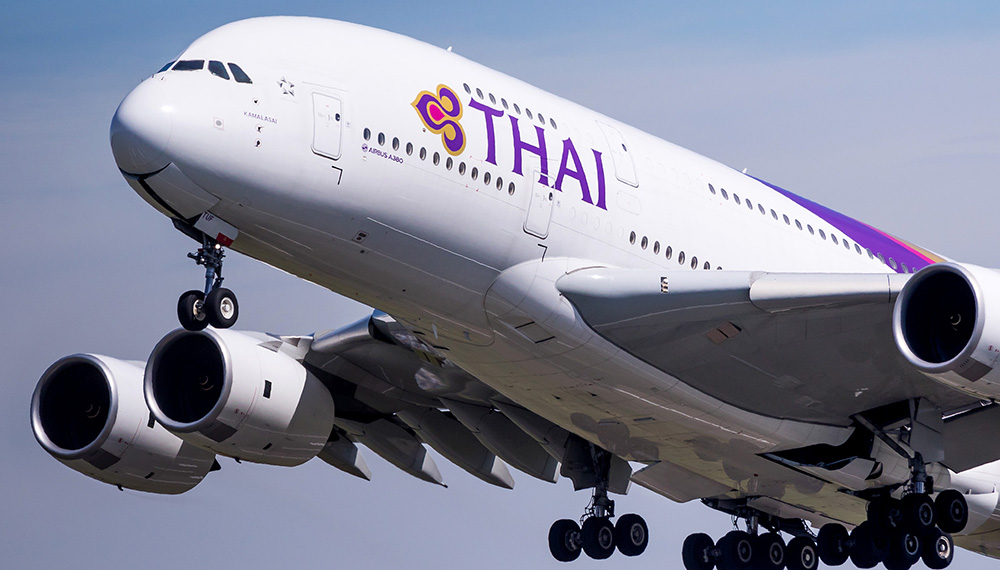
2018 was an interesting year in the airline industry. We saw a temporary spike in oil prices, and have also continued to see strong global competition among airlines. However, different airlines have coped with this in different ways.
For example, Cathay Pacific is an example of an airline that had a rough couple of years, but 2018 was the year where they became profitable again.
Unfortunately that wasn’t the case for all airlines, though.
Thai Airways is an airline that has been struggling for years. In 2015 the airline announced a restructuring, and as part of this turnaround plan the airline expected to be profitable again by 2018.
Well, 2018 results are in, so how did Thai Airways do? Not well, not well at all. Thai Airways has reported 2018 losses of 11.6 billion baht (~365 million USD), up from a loss of 2.1 billion baht (~66 million USD) in the previous year.
Ouch. So while 2018 was supposed to be the year where they turn around, instead they lost five times more money than in the previous year.
Here are some interesting statistics about Thai Airways’ 2018 results:
Operating income rose 3.9% year-over-year
During the year the airline took delivery of five planes and retired three, meaning they had a net increase of three aircraft, bringing their fleet to 103 planes (note that part of their 2015 turnaround plan was to greatly reduce the size of their fleet, though it has only gotten bigger rather than smaller)
Thai’s average load factor decreased from 79.2% in 2017 to 77.6% in 2018
Available seat kilometers increased by 2.9% in 2018, while revenue passenger kilometers increased by 1% (in other words, they added significantly more capacity than passengers)
No need to worry, though, folks. Thai Airways now has a new turnaround plan — the airline will now make money by 2022!
The problems at Thai Airways seem obvious, though I haven’t really seen much change over the past few years, despite their supposed restructuring. The way I see it:
Thai Airways doesn’t have a competitive business class product on many of their planes, so many business travelers will avoid them.
The airline still flies 747s, which have a terrible business class product and which aren’t efficient.
The airline only operates widebody planes, and while they have a low cost carrier with narrowbodies, there are plenty of business markets where there’s not enough demand for a widebody, but where a low cost carrier doesn’t cut it.
The airline said they’d cut many of their unprofitable longhaul routes, though I haven’t seen many cuts.
The airline also said they’d improve revenue management; anecdotally I find that Thai Airways has highly uncompetitive prices in many markets, no doubt causing them to lose market share to other airlines, especially since the Gulf carriers typically have excellent fares to & from Bangkok.
Bottom line
I like flying with Thai Airways, and I love visiting Thailand, but there’s no denying the airline is a bit of a mess. 2018 was the year where they were supposed to become profitable, but instead their losses just keep getting bigger.
The airline blames high oil prices and fierce competition on their losses, though it seems to me like it goes much deeper than that.
I’ll be curious to see if Thai actually makes more significant changes under the leadership of their new CEO, or if they’ll just keep moving forward their estimated year of profitability by a few years, as they’ve been doing.