




















Surprise move pits Princess Ubolratana Rajakanya Sirivadhana Varnavadi against leader of 2014 coup
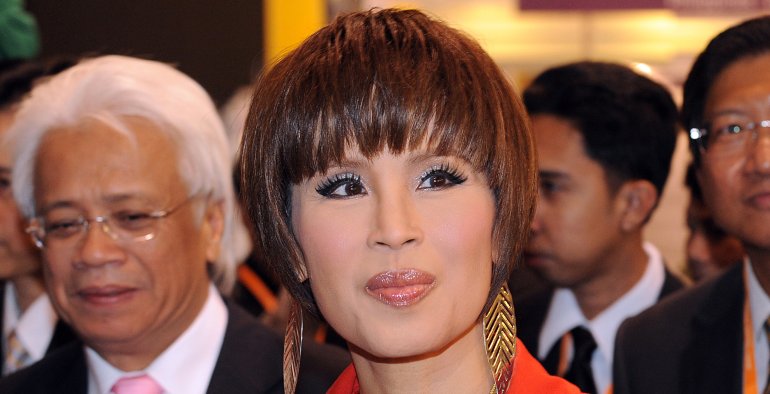
In a surprise move, political party Thai Raksa Chart has announced Ubolratana Mahidol as top-candidate for elections scheduled on March 24.
On the last day of registration, Thai Raksa Chart confirmed rumours that had been circulating the last days in Thailand: Ubolratana Rajakanya Sirivadhana Barnavadi, older sister of King Vajiralongkorn and eldest child of late King Bhumibol Adulyadej, enters the race for the office of prime minister.
Previously, the party had kept her nomination secret, only hinting that they would nominate “an important person outside the party”.
Elections are scheduled for March 24. After having been postponed multiple times, the world is watching with great anticipation which party will win most of the 500 parliamentary seats.
The Thai Raksa Chart was founded as an alternative to the Peu Chart party amid threats by the military junta to dissolve the latter. Peu Chart’s leader, Thaksin Shinawatra, was ousted in a coup in 2006, but has led the party from afar. Ubolratana has openly maintained close ties with Thaksin.
She is the first member of the royal family to run for the office, although she relinquished her royal title when she married a foreigner in 1972. The royal family is traditionally seen as being above politics, although highly influential.
Ubolratana is expected to be main contesters to current Prime Minister Prayut Chan-o-cha, who in a statement Friday morning confirmed that he has accepted Phalang Pracharat Party’s candidate nomination “to maintain peace and order” in the country.
Thitinan Pongsudhirak, director of the Institute of Security and International Studies at Chulalongkorn University, said the announcement had created a “political earthquake”, as it was a “profound and unprecedented development”.
He said the move had catapulted the previously small contestant party to the top. “It is the leading contender for the election now,” he said.
Yet it was unclear at this point, Thitinan said, whether this would create more division in Thai politics, or the opposite. He said the princess could help bridge a divide in Thai politics as an outsider to politics, but it also bore the risk of even more polarisation with the royal family on the one side and the military on the other. “Whether it leads to a more reconcilable political environment, we will have to see whether the other main political players are included in the government,” he said in a phone interview.
Bank, a student in Bangkok, remained skeptical, saying he believed that corruption in Thai politics would continue. “Thai political parties consider the politics as the game of preserving their personal interest,” Bank said.
In a statement unofficially translated by local news outlet Khaosod, the Thai Raksa Chart Party announced they were “deeply honored” that Ubolratana had accepted the nomination. “She is concerned and wishes to take part in lifting Thais out of poverty,” the unofficial translation reads.
Paul Chambers, a lecturer at the College of Asean community studies at Thailand’s Naresuan University, said that although Ubolratana did not fall under the restrictive lèse-majesté law, which prohibits criticism of the royal family, open disapproval of her and her policies would become difficult. “Who would dare campaign against the king’s sister?,” he said in an email to the Guardian. “She is a definite threat for Prayut because she holds much more legitimacy to Thais than does a coup leader.”
“The (party) board agrees that the name of Princess Ubolratana, an educated and skilled person, is the most suitable choice,” Thai Raksa Chart party leader Preechapol Pongpanich told reporters.
“I believe there will be no legal problems in terms of her qualification, but we have to wait for the Election Commission to endorse her candidacy,” he said.
The Election Commission is required to endorse all candidates by next Friday.
Thaksin Shinawatra, a billionaire self-exiled former premier, stands at the heart of Thailand’s bitter decade-long political schism. He is loathed by the army and Bangkok elite, yet adored by the rural poor.
Also on Friday, the head of Thailand’s military junta, Prayuth Chan-ocha, said he will contest elections on 24 March as a candidate for prime minister. But the shock entrance of Ubolratana is likely to throw the military’s plans into disarray.
The military junta, which seized power in 2014, has been criticised for using the law – which can see people jailed for up to 15 years on each count – to stifle opposition.
In 2015, a man was jailed for 30 years over six Facebook posts and the local printer of the New York Times refused to publish an edition with a story on the king.
Prayuth, the army chief who seized power from a democratic government in a 2014 coup and made himself prime minister, said in a statement he would run for the pro-military Palang Pracharat party.
The nomination of the princess, 67, breaks the long-standing tradition of Thai royalty staying out of politics.
Thailand has been a constitutional monarchy since 1932 but the royal family has wielded great influence and commanded the devotion of millions.
Ubolratana, 67, is a colourful, public-facing royal. She relinquished her royal titles after marrying an American decades ago but the couple eventually divorced and she moved back to Thailand where she is still considered part of the royal family.